Effective policing in the United States depends not only on the professionalism of individual officers but also on the systems that guide their actions. Among the most important of these systems are comprehensive training programs and regularly updated high‑risk policies. When these elements are neglected, police departments expose themselves—and their communities—to unnecessary danger and significant civil liability. United States Supreme Court case law has repeatedly affirmed that inadequate training or outdated policies can amount to constitutional violations, making this issue both a legal and operational priority.
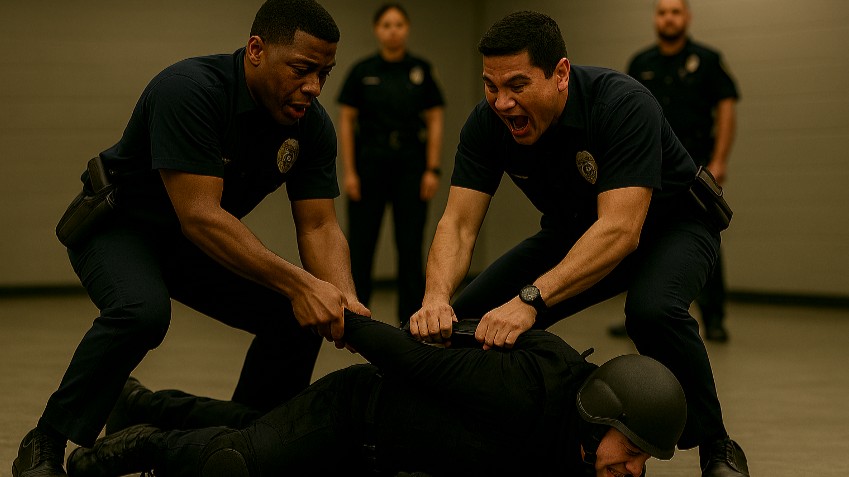
Scenario-based training prepares officers for real-world high-risk encounters, such as use of force and critical decision-making.
The foundational case on police training liability is City of Canton v. Harris, 489 U.S. 378 (1989), in which the U.S. Supreme Court held that municipalities may be liable under §1983 when a failure to train reflects “deliberate indifference” to constitutional rights. The Court emphasized that training is a core managerial responsibility, not an optional enhancement.
Role-playing exercises help officers develop de-escalation skills and learn to handle high-risk situations safely.
Subsequent cases have expanded on this standard. In Board of County Commissioners v. Brown, 520 U.S. 397 (1997), the Court clarified that even a single failure‑to‑train incident can trigger liability if the risk of constitutional harm was plainly foreseeable. This means departments cannot rely on generally “good” training programs; they must ensure that every officer receives appropriate instruction for the tasks they are expected to perform.
Departments must regularly review and if necessary, update high-risk policies to stay compliant and reduce liability. High‑risk policies—such as those governing use of force, vehicle pursuits, arrests, and medical care—are the areas most likely to generate civil rights claims. When these policies are outdated or inconsistently applied, the risk of litigation increases dramatically.
Force simulation technology allows officers to practice decision-making in high-risk situations.
Courts have also emphasized that training must reflect the actual conditions officers encounter in the field, including stress, movement, and lighting. In Popow v. City of Margate, 476 F. Supp. 1237 (D.N.J. 1979), the court found a municipality liable where firearms training focused almost exclusively on static range shooting and failed to prepare officers for real‑world encounters. The court specifically noted that officers routinely face low‑light environments, moving subjects, and residential backdrops, and that training which ignores these realities can constitute deliberate indifference. The decision made clear that training limited to ideal conditions is legally insufficient when officers are expected to operate under far more complex circumstances.
Similarly, in Zuchel v. City of Denver, 997 F.2d 730 (10th Cir. 1993), the Tenth Circuit upheld municipal liability where use‑of‑force training consisted largely of classroom instruction without meaningful decision‑making or scenario practice. The court stressed that deadly force encounters require split‑second judgment, and that agencies must train officers not just in tactics, but in recognition, perception, and threat assessment under dynamic conditions. The absence of realistic, scenario‑based training was a central factor in finding deliberate indifference.
Beyond legal exposure, inadequate training undermines officer safety, public trust, and the legitimacy of the department. High‑risk encounters—use of force, mental‑health crises, domestic violence—require nuanced judgment that only robust training can provide. Such training fosters public trust and transparency in high-risk police operations. Supervisors and trainers must monitor officer performance during high-risk scenario training to identify gaps and reinforce standards.
Departments that prioritize comprehensive, realistic training and continuously review their high-risk policies build safer communities and leads to greater professionalism among their officers.