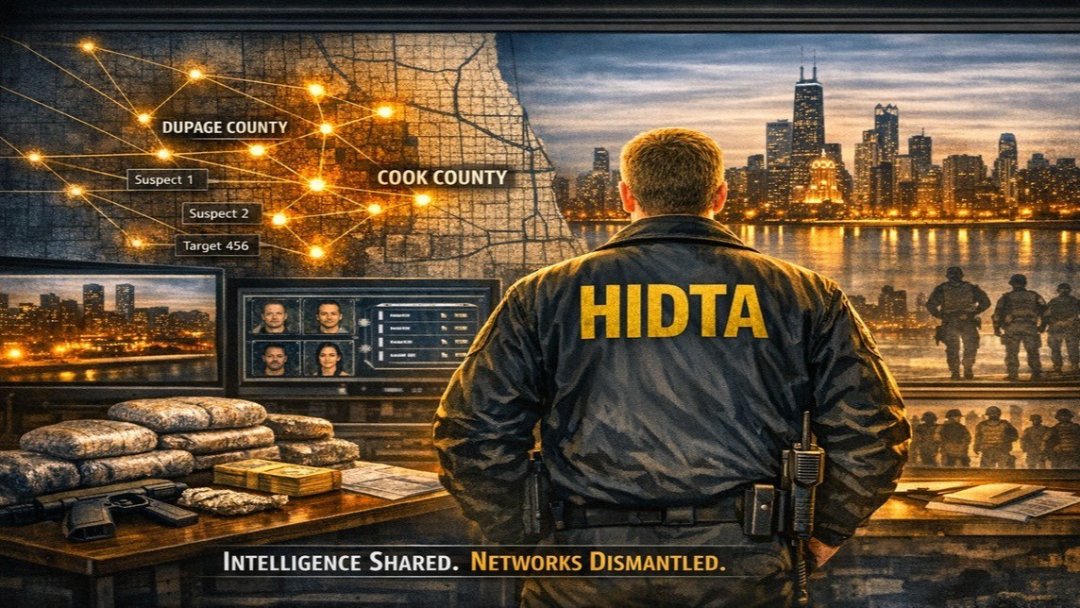
After filming an episode of Wearing the Badge, Garry McCarthy , Robert Toerpe , Brian Strockis and I sat down for dinner. What started as a casual conversation quickly turned into something far more meaningful. We began talking about the one factor that consistently separates successful investigations from stalled ones: the willingness of law enforcement professionals to network, communicate, and share intelligence.
In today’s world, criminals do not respect jurisdictional boundaries. Drug traffickers, organized crews, and violent offenders operate across cities, counties, and sometimes states. Yet too often, law enforcement agencies are expected to work in silos. The reality is that no single department, no matter how well staffed or resourced, can effectively combat complex criminal networks alone.
I learned this lesson firsthand while assigned to the Cook County Sheriff’s Police – Chicago HIDTA Task Force. When I needed information on a drug trafficker operating in DuPage County, I did not rely solely on databases or formal requests that could take weeks. I picked up the phone and called Bob, who was assigned to DuPage Sheriff’s Narcotics Unit. Bob would do the same when he needed insight into individuals operating in Cook County. What we consistently found was that many of these major traffickers lived in one county while conducting their criminal operations in another.
That simple exchange of information often changed the entire trajectory of an investigation. By combining intelligence, surveillance, informant information, and resources, we were able to identify larger conspiracy cases that would never have been uncovered by working independently. Those partnerships allowed us to utilize the Statewide Grand Jury and prosecute multi county conspiracy cases that carried real consequences. These were not just arrests for possession or low-level dealing. These were cases that dismantled organizations.
Sharing intelligence is not about giving up control or credit. It is about recognizing that public safety is a shared responsibility. When agencies collaborate, they close gaps that criminals depend on. They identify patterns faster. They connect people, places, and events that might otherwise seem unrelated. Most importantly, they prevent violence before it occurs.0